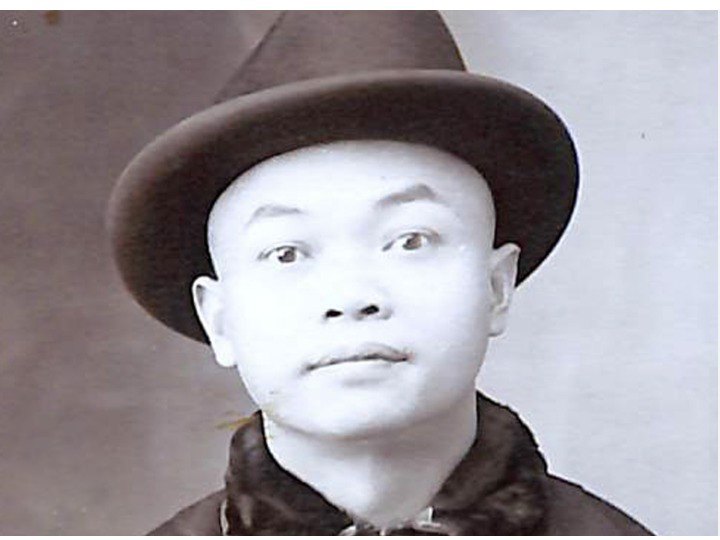
I have birthright citizenship because I was born in Boston.
My father enlisted in the US Army when the US was in WWII. Since the US was at war, my father became a citizen on the day he enlisted. However, my mother was still in China. It was only after my father returned home from Europe with the support of First Baptist Church in Boston did my mother arrived on an US Army Transport, the USS Benson in 1947. Her first step on US soil was in San Francisco.
My mother was a permanent resident carrying a green card but never learned enough English to take the citizenship test to become a citizen. She worked in the garment factory along with many other Chinese women who didn’t speak enough English to find other kinds of work. She joined the International Ladies Garment Workers Union and complained about meager pay for piecemeal work.
If birthright citizenship was not protected in the US Constitution, I wondered if I would been labeled as a foreigner or at least “a half of US citizen” because my father was willing to die on the battle field. I wondered if I would have been perceived differently at school from the other kids as the result of the color of my skin. I wondered if my pledging allegiance to the flag would have meant a bit less if I knew I was not a citizen.
Birthright citizenship is not necessarily people taking advantage of the benefits that the US has to offer. It’s about parents who may have given generously to this country even when they were not yet citizens. It’s about the reality that baby citizens are brought up in this country pledging allegiance to the flag whether the US is right or wrong and would still have their rightsguaranteed in the Constitution to speak out against injustices.
Today we live in a global world when arbitrary boundaries are less relevant to maintain. Commodities are produced and transported daily. Climate threats don’t respect borders. Markets jump up and down when news is reported. Today we are more world citizens than citizens of any one country.
When birthright citizenship is denied, we turn away people who can contribute to our country. Consequently, our country becomes less equitable and less competitive in commerce. We become more isolated and farther from the human family that God’s plan is for us.
Born in San Francisco, Wong Kim Ark whose parents were both Chinese citizens tested the Fourteenth Amendment when US Supreme Court decided in 1898, that he had birthright citizenship. The vote was 6-2—may this be so again.